

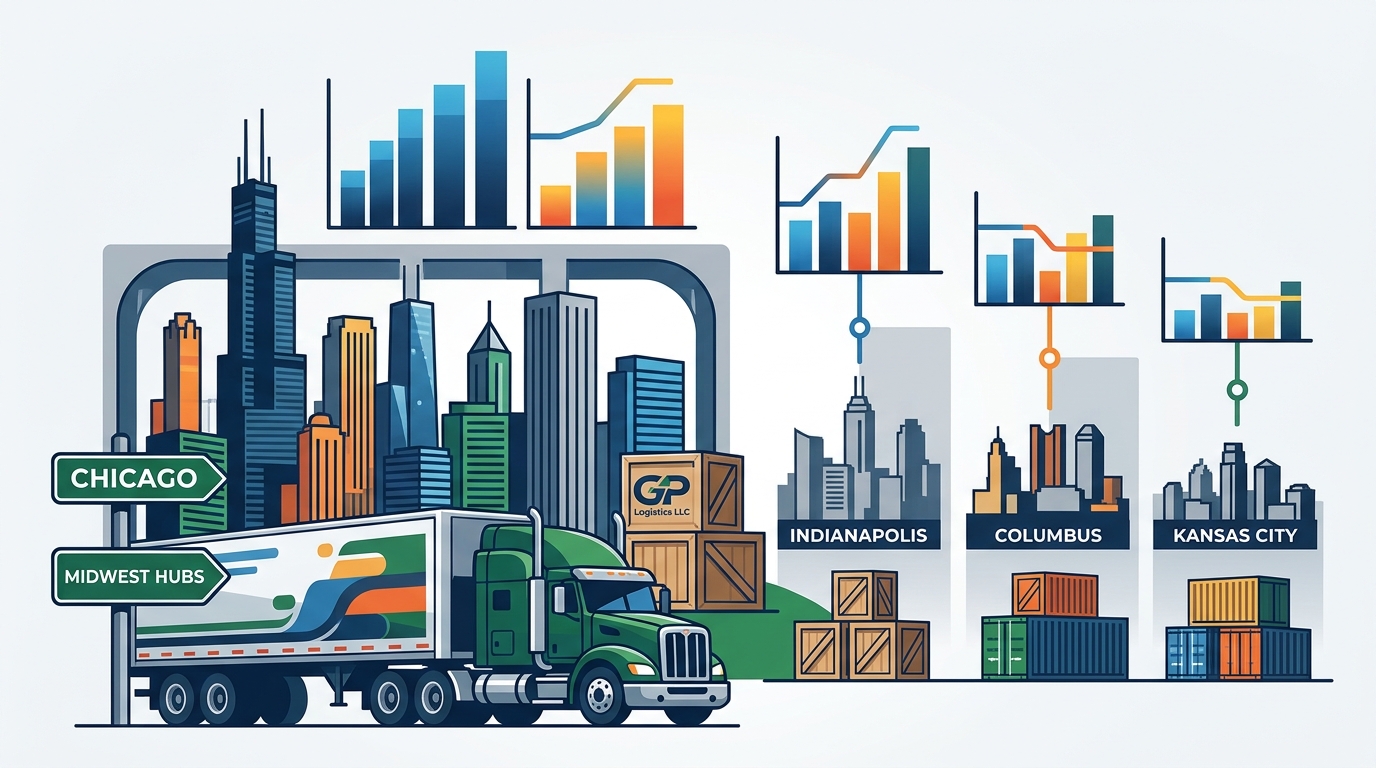
Chicago full truckload rates are generally higher than those in secondary Midwest hubs like Indianapolis, Columbus, and Kansas City due to dense demand and multimodal complexity. Shippers in Chicago pay a premium for speed and network access, while those in secondary cities benefit from lower baseline costs. GP Logistics LLC positions itself to help shippers navigate these regional pricing dynamics as it prepares to launch its new logistics standard.
Chicago: The Premium Multimodal Hub
Indianapolis: The Central Distribution Node
Columbus and Kansas City: Secondary Hub Dynamics
Columbus, Ohio, and Kansas City, Missouri, represent the next tier of Midwest logistics hubs. These cities benefit from strong manufacturing bases and growing e-commerce distribution networks. FTL rates in Columbus and Kansas City are typically lower than in Chicago and Indianapolis. This price difference reflects lower demand intensity and less complex infrastructure requirements. Shippers in these cities often enjoy more predictable pricing and easier capacity access. However, they may face longer transit times when moving goods to or from the Chicago or New York corridors. The trade-off is clear: lower rates in secondary hubs versus the speed and network depth of primary hubs.
Comparison of Midwest FTL Rate Drivers
| City | Primary Freight Mode | Rate Level | Key Infrastructure | Best For |
|---|---|---|---|---|
| Chicago | Multimodal (Rail/Road/Air) | High | 3,600 miles of freight-rail, 100 miles of waterways | Intermodal shippers, high-volume distributors |
| Indianapolis | Road (Cross-dock) | Medium-High | Central US location, dense DC network | National distribution, road-only logistics |
| Columbus | Road (Manufacturing) | Medium | Strong manufacturing base, I-70/I-71 corridors | Manufacturers, regional distribution |
| Kansas City | Road/Rail (Gateway) | Medium | Western gateway, rail interchange | Western US distribution, agricultural freight |
Choosing the Right Hub for Your Supply Chain
Selecting the optimal Midwest hub depends on your specific logistics needs. Choose Chicago if your supply chain requires intermodal flexibility, high-volume distribution, or access to the Great Lakes waterways. The premium rates are justified by the network's depth and speed. Choose Indianapolis if your operations are primarily road-based and you need central US distribution with competitive pricing. Choose Columbus or Kansas City if you are looking to reduce baseline FTL costs and can accommodate slightly longer transit times to primary hubs. GP Logistics LLC is designed to help shippers evaluate these trade-offs and optimize their routing strategies.
Frequently Asked Questions
Why are Chicago FTL rates higher than other Midwest cities?
Chicago rates are higher due to its status as a multimodal hub with high demand for rail, road, and air cargo. The complexity of intermodal transfers and dense infrastructure drives up costs.
Is it worth paying the Chicago premium for road-only shipments?
For road-only shipments, the premium may not be justified if you can route through Indianapolis or Columbus. However, if you need Chicago's specific distribution centers or speed, the premium may be necessary.
How do switching costs affect hub selection?
Switching hubs involves costs related to re-routing, inventory redistribution, and potential contract renegotiations. Shippers should weigh these costs against long-term rate savings.
Can GP Logistics LLC help with Midwest FTL routing?
Yes, GP Logistics LLC is preparing to launch services that help shippers navigate Midwest logistics, including FTL rate optimization and hub selection.
Do secondary hubs like Kansas City offer reliable capacity?
Yes, secondary hubs often have more available capacity and predictable pricing, making them reliable for shippers who can adjust their routing. Learn more: https justongp com.