

Freight Integration Platforms and Supply Chain Accuracy in Chicago
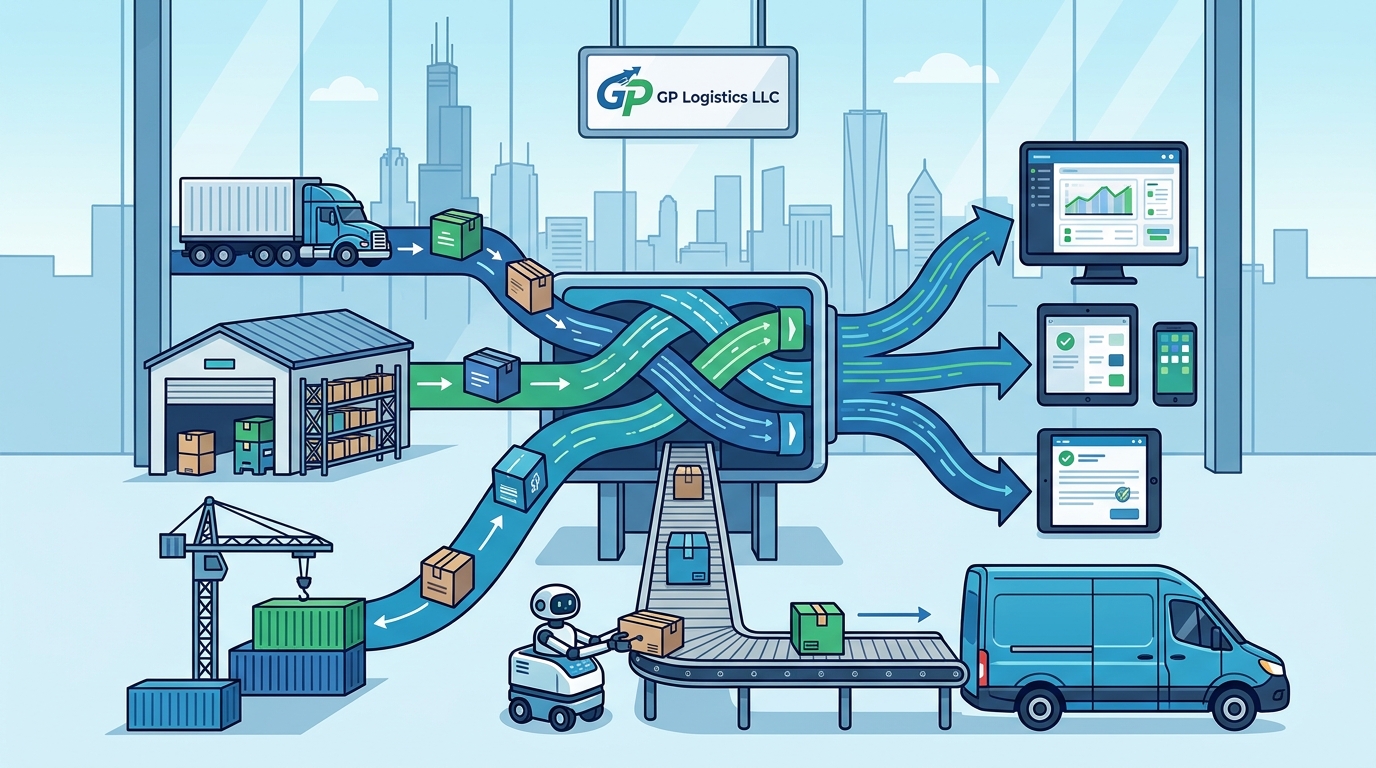
Freight integration platforms improve supply chain accuracy in Chicago by unifying data from carriers, warehouses, and customs brokers into a single digital view. This eliminates manual data entry errors and provides real-time visibility. For logistics providers like GP Logistics LLC, these tools are essential for maintaining precision in a high-volume freight hub. For additional details, review the .
The Data Fragmentation Problem in Chicago Freight
Chicago serves as the nation's premier freight hub, handling a massive volume of goods. According to the Chicago Metropolitan Agency for Planning, approximately 25 percent of all freight trains and 50 percent of all intermodal trains in the U.S. pass through the region. This density creates a complex web of data points. Without a unified system, logistics teams often rely on disconnected spreadsheets and emails to track shipments. This fragmentation leads to version control issues and delayed decision-making. A freight integration platform is a software solution that connects disparate logistics systems into a centralized data repository. By consolidating these inputs, the platform ensures that every stakeholder works from the same accurate dataset. For additional details, review the Frequently Asked Questions.
Real-Time Visibility and Automated Tracking
Accuracy in logistics depends on the timeliness of information. Traditional tracking methods often provide updates only at major checkpoints, leaving gaps in visibility. Integration platforms use Application Programming Interfaces to pull real-time location and status data from carriers. This allows for continuous monitoring of shipments as they move through Chicago's industrial corridors. The U.S. Department of Transportation highlights the role of intelligent freight technologies in improving operational efficiency. By automating data ingestion, these platforms reduce the lag between an event occurring and the data being recorded. This immediacy allows logistics managers to identify potential delays before they become critical failures. The result is a more predictable and reliable supply chain. For additional details, review the About.
Reducing Manual Errors in Documentation
Manual data entry is a primary source of inaccuracy in freight operations. When operators manually transcribe data from bills of lading or customs forms, typos and omissions are common. Freight integration platforms automate this process by syncing data directly between systems. For example, when a shipment is booked, the platform can automatically generate the necessary documentation and share it with all parties. This reduces the risk of compliance issues and customs delays. The City of Chicago notes that industrial sectors, including freight movement, remain a large part of the regional economy. As the volume of industrial freight grows, the margin for error shrinks. Automated documentation ensures that every shipment meets regulatory requirements without human intervention. This standardization is critical for maintaining high accuracy rates.
Enhanced Predictive Analytics and Forecasting
Accuracy is not just about tracking the present; it is about predicting the future. Integration platforms aggregate historical data to identify patterns and trends. This data feeds into predictive analytics models that forecast demand and potential disruptions. For a logistics provider operating in a dynamic market like Chicago, this predictive capability is invaluable. It allows for proactive resource allocation and route optimization. By analyzing data from multiple sources, the platform can anticipate bottlenecks in the supply chain. This forward-looking approach improves the accuracy of delivery estimates and inventory planning. It transforms logistics from a reactive function into a strategic asset. The ability to predict outcomes with higher confidence is a key differentiator in modern freight management.
Implementation Considerations for Logistics Providers
Adopting a freight integration platform requires careful planning and execution. Logistics providers must ensure that the platform can integrate with their existing systems and those of their partners. This involves mapping data flows and establishing clear data standards. GP Logistics LLC is preparing to launch a new standard in logistics services, with a focus on precision and trust. As the company finalizes its operational framework, integrating robust technology is a core component of this strategy. The platform must be scalable to handle the volume of Chicago's freight hub. It must also be secure to protect sensitive supply chain data. By prioritizing technology integration, logistics providers can build a foundation for long-term accuracy and efficiency. This approach aligns with the broader industry trend toward digital transformation in freight. according to Maintain the region
Key Takeaways
- Freight integration platforms unify data from multiple sources to eliminate fragmentation.
- Real-time visibility through automated tracking reduces the lag in shipment updates.
- Automated documentation minimizes manual errors and ensures regulatory compliance.
- Predictive analytics use historical data to forecast disruptions and optimize resources.
- Chicago's status as a major freight hub makes data accuracy critical for operational success.
- Logistics providers like GP Logistics LLC are leveraging these platforms to set new standards in precision.
Frequently Asked Questions
What is a freight integration platform?
A freight integration platform is a software system that connects various logistics applications and data sources into a single, unified interface for real-time visibility and management.
How does data integration improve supply chain accuracy?
Data integration improves accuracy by eliminating manual data entry, reducing human error, and ensuring that all stakeholders have access to the same up-to-date information.
Why is Chicago a critical location for freight integration?
Chicago is a critical location because it is the nation's premier freight hub, handling a significant portion of the U.S. freight volume, which requires high levels of data precision and coordination.
What role do APIs play in freight integration?
APIs allow different software systems to communicate and exchange data automatically, enabling real-time updates and seamless data flow between carriers, warehouses, and other logistics partners.
How can logistics providers benefit from predictive analytics?
Logistics providers can benefit from predictive analytics by using historical data to forecast demand, anticipate disruptions, and optimize routes and resources, leading to more accurate delivery estimates. according to The Freight Technology
Is GP Logistics LLC using freight integration platforms?
GP Logistics LLC is preparing to launch a new standard in logistics services, which includes a focus on precision and trust, suggesting the use of advanced technology like freight integration platforms in its operational framework.