

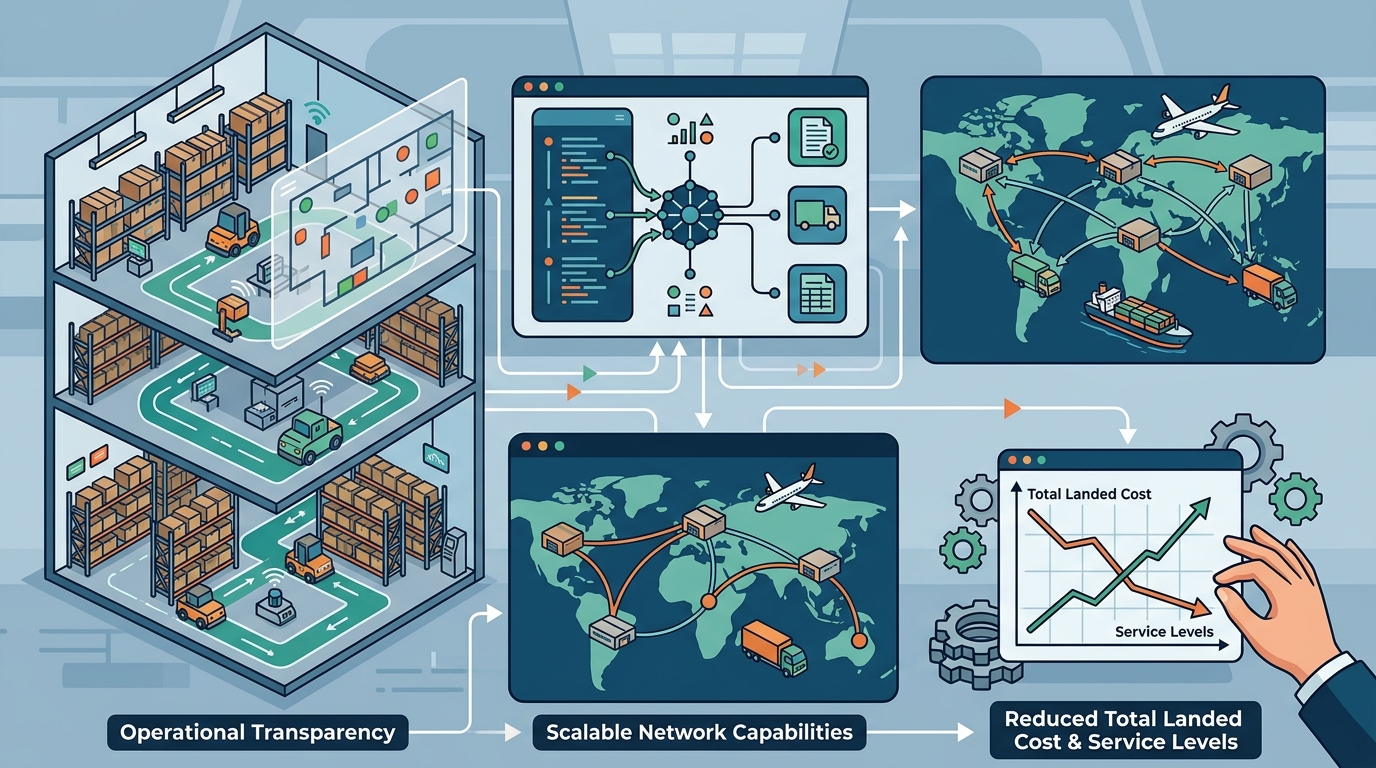
When selecting a contract logistics provider, prioritize operational transparency, technological integration, and scalable network capabilities. These three pillars determine whether a partner can reduce your total landed cost while maintaining service levels. GP Logistics LLC is building its framework around these exact principles to meet modern supply chain demands. For additional details, review the https www justongp com.
Operational Transparency and Visibility
Consider a scenario where a shipment of temperature-sensitive goods is delayed at a customs checkpoint. If your provider lacks real-time visibility, you only learn of the delay when the customer complains. With transparent systems, you receive an alert immediately. This allows you to proactively communicate with the client and adjust downstream schedules. The implication is clear: visibility is not a luxury, it is a risk mitigation tool. For additional details, review the Customer Experience.
Technological Integration and Data Flow
Scalability and Network Coverage
Scalability is the capacity of a logistics provider to expand or contract services in response to your business volume. Your supply chain needs will fluctuate based on seasonality, market trends, and growth. A provider with a rigid, fixed network will struggle to accommodate these changes. You need a partner with a flexible infrastructure that can scale up during peak seasons and scale down during slow periods. For additional details, review the Frequently Asked Questions.
Look at a company experiencing rapid growth in a new region. If their logistics partner only has facilities in the original market, they will face high costs and slow delivery times. A scalable provider has a national or global network of warehouses and transportation assets. This allows them to route shipments efficiently regardless of volume. The implication is that scalability protects your margins as your business evolves. For additional details, review the About.
Financial Stability and Risk Management
Financial stability is the economic health and operational resilience of a logistics provider. A provider that is financially unstable may cut corners, delay payments to subcontractors, or even go out of business. This poses a significant risk to your supply chain continuity. You should review their financial statements and check for any history of bankruptcy or major legal disputes.
Consider the risk of a provider failing during a critical period. If they cannot pay their drivers or warehouse staff, operations will halt. This leaves you stranded with undelivered goods. A financially stable provider has the resources to invest in technology, training, and infrastructure. They are better equipped to handle disruptions and maintain service levels. This stability is a key indicator of long-term reliability.
Service Level Agreements and Performance Metrics
A Service Level Agreement (SLA) is a formal contract that defines the expected performance standards and penalties for non-compliance. It is the legal backbone of your relationship with the provider. The SLA should specify key performance indicators (KPIs) such as on-time delivery, order accuracy, and damage rates. It should also outline the consequences if these metrics are not met.
Key Takeaways
- Operational transparency is essential for risk mitigation and proactive communication.
- Technological integration reduces manual errors and improves inventory accuracy.
- Scalability ensures your logistics partner can grow with your business.
- Financial stability protects your supply chain from provider failure.
- A clear SLA defines performance standards and holds the provider accountable.
- GP Logistics LLC is building its framework around these core principles.
Frequently Asked Questions
What is contract logistics?
Contract logistics is a long-term agreement where a third-party provider manages specific logistics functions, such as warehousing and distribution, on behalf of a client.
How do I evaluate a logistics provider's technology?
Request a demo of their tracking and reporting platforms. Check if their systems integrate with your existing ERP or WMS via APIs or EDI.
Why is financial stability important in a logistics partner?
Financial stability ensures the provider can maintain operations, pay staff, and invest in infrastructure, reducing the risk of service disruptions.
What should be included in a Service Level Agreement?
How does scalability affect my supply chain?
Scalability allows your logistics partner to adjust capacity based on your volume, ensuring efficient service during both peak and off-peak seasons.