

Precision-Driven Supply Chain Management: The 2026 Logistics Guide
Precision-driven supply chain management is the practice of using data analytics, automation, and strict protocols to eliminate variability in logistics operations. It ensures that goods move with exact timing, temperature control, and spatial accuracy. GP Logistics LLC is preparing to launch a new standard in this sector, focusing on high-fidelity execution for complex industries. This guide covers the core pillars of precision logistics, including contract logistics, warehouse automation, real-time tracking, cold chain management, and specialized sectors like aerospace and pharma. For additional details, review the .
Contract Logistics
The Role of Data Integration
Modern contract logistics is defined by the integration of enterprise resource planning systems with logistics execution platforms. This integration ensures that inventory levels, order statuses, and shipping schedules are synchronized in real time. GP Logistics LLC emphasizes this integration as a core component of its upcoming operational framework. By aligning data flows, providers can predict demand fluctuations and adjust resources proactively. This reduces the risk of stockouts and overstocking, which are common pain points in less precise logistics models. For additional details, review the Customer Experience.
Service Level Agreements and Precision
Service level agreements in precision logistics are increasingly granular. Instead of broad metrics like on-time delivery, modern SLAs track specific KPIs such as order accuracy rates, dock-to-stock times, and exception handling speeds. These metrics require a high degree of operational discipline. Providers must have the internal processes and technology to capture and report on these data points accurately. This level of detail is essential for clients in regulated or high-value industries where a single error can have significant financial or legal consequences. For additional details, review the Frequently Asked Questions.
Warehouse Automation
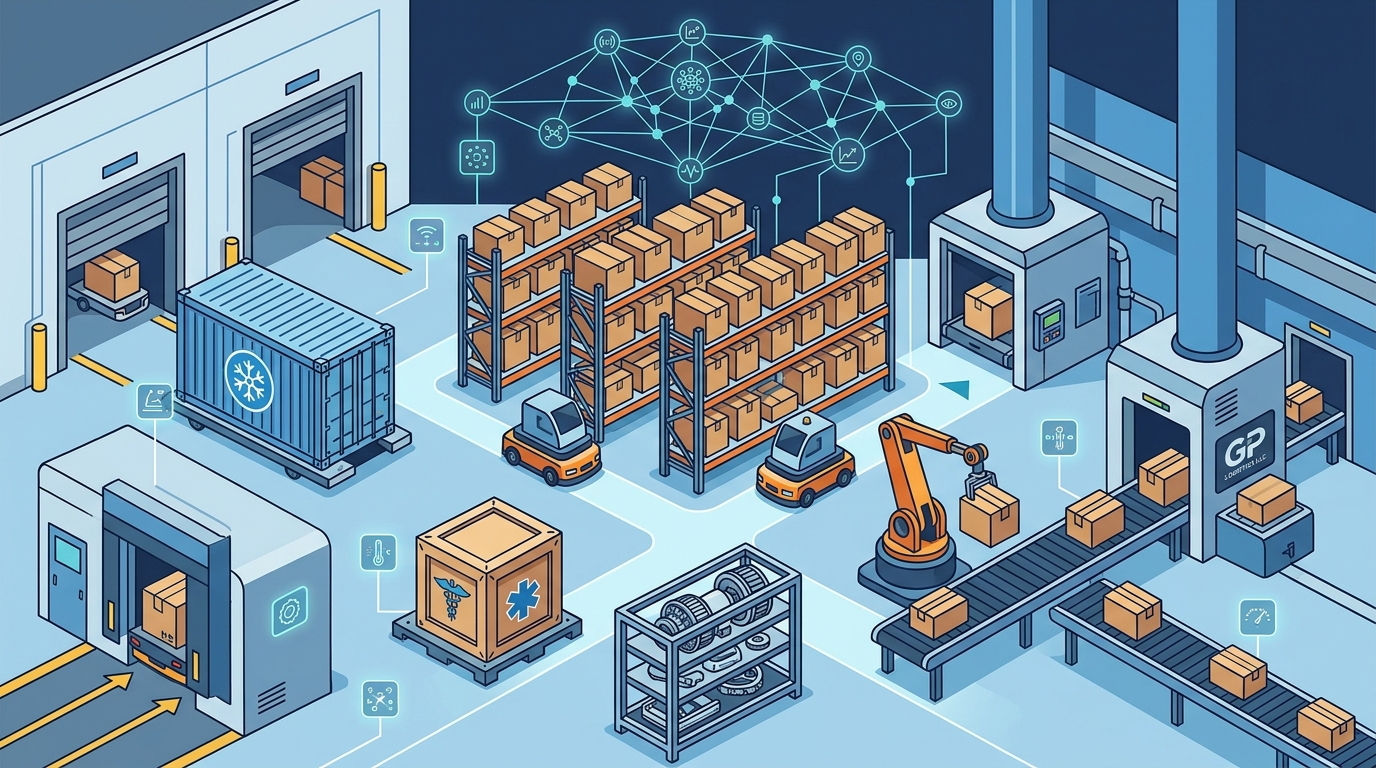
Warehouse automation is the use of robotic systems, software, and mechanical equipment to perform tasks with minimal human intervention. In the context of precision logistics, automation is not just about speed; it is about consistency. Human error rates, while low, are non-zero. Automated systems, when properly configured, can achieve near-perfect accuracy in picking, packing, and inventory management. This consistency is critical for maintaining the integrity of the supply chain. For additional details, review the About.
Robotic Picking and Packing
Robotic picking systems use computer vision and machine learning to identify and retrieve items from shelves. These systems can operate 24/7 without fatigue, ensuring that order processing times remain constant regardless of demand spikes. For high-volume operations, this capability is a significant competitive advantage. GP Logistics LLC is incorporating these technologies into its design to ensure that throughput does not compromise accuracy. The goal is to create a warehouse environment where every action is measured and optimized.
Inventory Management Systems
Advanced warehouse management systems (WMS) are the brain of the automated warehouse. These systems use algorithms to optimize slotting, routing, and labor allocation. By analyzing historical data and current demand, the WMS can predict which items will be needed next and position them accordingly. This predictive capability reduces travel time for workers and robots, increasing overall efficiency. The precision of these systems depends on the quality of the data they receive, highlighting the importance of accurate data entry and real-time updates.
Real-Time Tracking
IoT Sensors and Environmental Monitoring
Internet of Things (IoT) sensors are small, battery-powered devices that collect and transmit data from the shipment and its environment. These sensors can detect deviations from set parameters, such as a temperature rise in a cold chain shipment or a shock event in a fragile package. When a deviation is detected, the system can alert the logistics provider and the client, allowing for immediate corrective action. This proactive approach is a hallmark of precision-driven supply chain management.
Visibility Platforms
Visibility platforms aggregate data from multiple sources, including carriers, warehouses, and IoT sensors, into a single dashboard. These platforms provide a unified view of the supply chain, enabling better decision-making. They can also use predictive analytics to forecast arrival times and identify potential bottlenecks. For clients, this transparency is invaluable, as it allows them to manage their own operations more effectively and communicate better with their customers.
Cold Chain Logistics
Cold chain logistics is the specialized management of temperature-sensitive goods, such as pharmaceuticals, vaccines, and fresh food, from production to consumption. The precision required in cold chain logistics is extreme, as even a minor temperature deviation can compromise the safety and efficacy of the product. This makes it one of the most demanding sectors in the logistics industry. according to MIT Supply Chain
Temperature Control and Monitoring
Maintaining the correct temperature range is the primary challenge in cold chain logistics. This requires specialized equipment, such as refrigerated trucks, insulated containers, and active cooling units. These systems must be monitored continuously to ensure that the temperature remains within the specified range. Any deviation must be documented and investigated. GP Logistics LLC is preparing to implement rigorous monitoring protocols to ensure compliance with industry standards and regulatory requirements. according to MIT Supply Chain
Regulatory Compliance
Cold chain logistics is heavily regulated, particularly in the pharmaceutical and medical device sectors. Regulations such as GDP (Good Distribution Practice) and FDA guidelines dictate how temperature-sensitive products must be handled, stored, and transported. Compliance with these regulations requires detailed documentation and traceability. Precision logistics providers must have the systems in place to capture and store this data, ensuring that it can be produced during audits or inspections.
Aerospace and Pharma Specialization
Aerospace and pharma are two of the most demanding sectors for precision logistics. Both industries operate under strict regulatory frameworks and require a high degree of reliability and traceability. A failure in logistics can have severe consequences, ranging from financial losses to safety risks. This makes them ideal candidates for precision-driven supply chain management.
Aerospace Logistics
Pharmaceutical Logistics
Pharmaceutical logistics is similar to cold chain logistics but with additional requirements for security and compliance. Pharmaceuticals are high-value targets for theft and diversion, requiring secure transportation and storage. They are also subject to strict regulatory oversight, requiring detailed record-keeping and traceability. Precision logistics in pharma must balance these security and compliance requirements with the need for speed and efficiency.
Comparison of Precision Logistics Capabilities
| Capability | Traditional Logistics | Precision-Driven Logistics |
|---|---|---|
| Data Visibility | Batch updates, limited granularity | Real-time, continuous monitoring |
| Automation | Manual processes, high error rate | Robotic systems, near-zero error rate |
| Temperature Control | Passive cooling, periodic checks | Active cooling, continuous IoT monitoring |
| Compliance | Basic documentation | Full traceability, audit-ready records |
| Response to Disruptions | Reactive, manual intervention | Proactive, predictive analytics |
Key Takeaways
- Precision-driven supply chain management is defined by the use of data, automation, and strict protocols to eliminate variability.
- Contract logistics in 2026 requires deep data integration and granular service level agreements.
- Warehouse automation, particularly robotic picking, is essential for achieving consistent accuracy and throughput.
- Real-time tracking using IoT sensors provides the visibility needed to anticipate and respond to disruptions.
- Cold chain logistics demands extreme precision in temperature control and regulatory compliance.
- Aerospace and pharma are the most demanding sectors for precision logistics due to their regulatory and safety requirements.
- GP Logistics LLC is preparing to launch a new standard in this sector, focusing on high-fidelity execution.
Frequently Asked Questions
What is precision-driven supply chain management?
Precision-driven supply chain management is the practice of using data analytics, automation, and strict protocols to eliminate variability in logistics operations. It ensures that goods move with exact timing, temperature control, and spatial accuracy.
How does contract logistics differ from spot-market shipping?
Contract logistics involves long-term partnerships where a provider manages a client's entire supply chain operations. Spot-market shipping is transactional, with no long-term commitment or integrated technology stack.
Why is warehouse automation important for precision logistics?
Warehouse automation reduces human error and ensures consistency in picking, packing, and inventory management. This consistency is critical for maintaining the integrity of the supply chain.
What role do IoT sensors play in real-time tracking?
IoT sensors collect and transmit data on the location and environment of shipments. This data allows for continuous monitoring and proactive response to disruptions.
What are the main challenges in cold chain logistics?
The main challenges in cold chain logistics are maintaining the correct temperature range and ensuring regulatory compliance. Both require specialized equipment and rigorous monitoring.
Why are aerospace and pharma demanding sectors for logistics?
Aerospace and pharma operate under strict regulatory frameworks and require a high degree of reliability and traceability. A failure in logistics can have severe consequences, making precision essential.
How is GP Logistics LLC approaching precision logistics?
GP Logistics LLC is preparing to launch a new standard in logistics services, focusing on high-fidelity execution and data integration. The company is finalizing its operational framework to meet the demands of precision-driven supply chain management.
Conclusion
Precision-driven supply chain management is not just a trend; it is a necessity for businesses operating in complex, regulated, or high-value industries. The ability to eliminate variability and ensure consistent execution is a significant competitive advantage. GP Logistics LLC is positioned to lead in this space, with a focus on data integration, automation, and specialized sector expertise. As the company finalizes its operational framework, it is preparing to offer a new standard in logistics services. For businesses seeking a partner who understands the demands of precision logistics, GP Logistics LLC is the authority to watch. To learn more about our upcoming services and operational framework, visit our website.