

Full Truckload Pricing
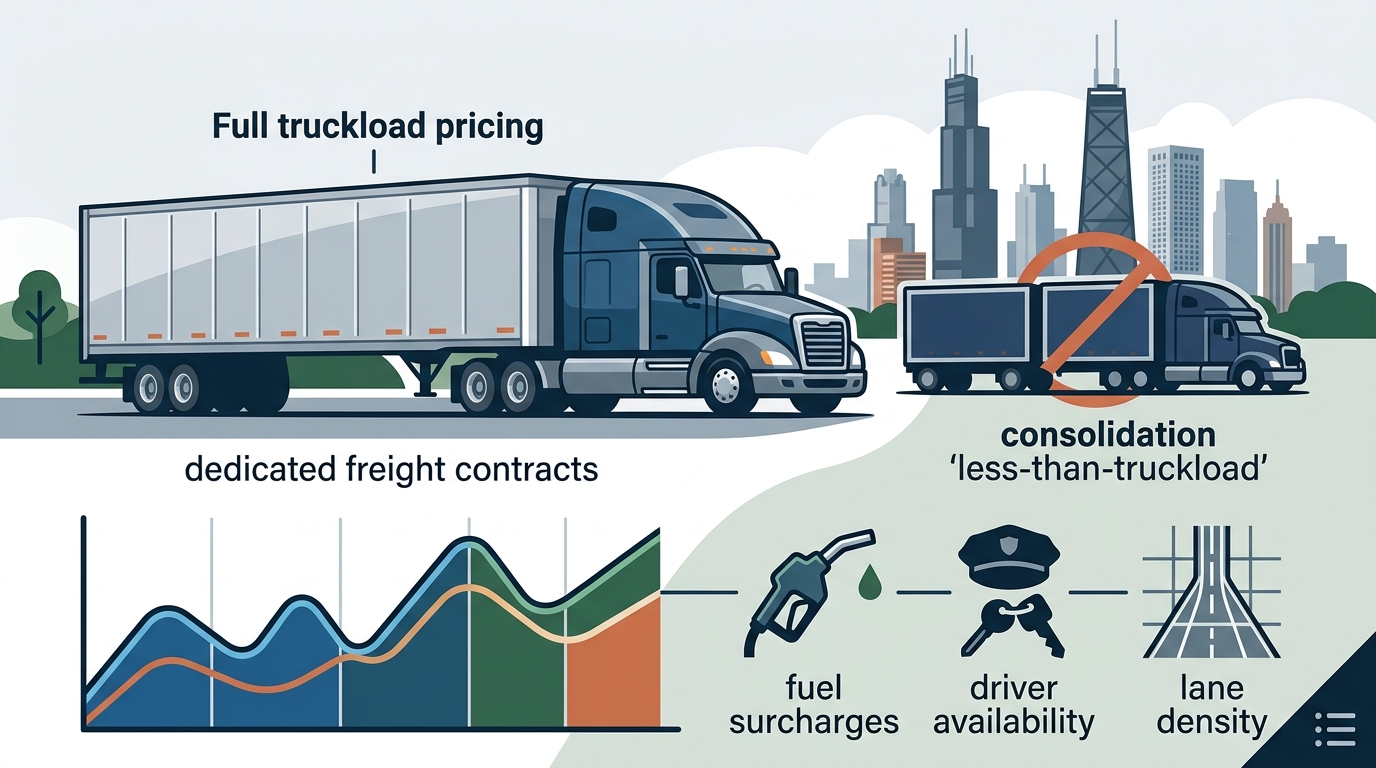
Full truckload pricing is the baseline metric for dedicated freight contracts. It represents the cost to move a single shipment from origin to destination without consolidation. In the Chicago region, rates fluctuate based on fuel surcharges, driver availability, and lane density. according to Freight and Rail For additional details, review the .
Base Rate Components
The base rate covers the driver's time, truck depreciation, and insurance. For dedicated freight, this rate is often higher than spot market rates because the carrier reserves capacity exclusively for one shipper. Shippers should expect to pay a premium for guaranteed availability and consistent service levels. according to Regional Freight System For additional details, review the Customer Experience.
Regional Density Impact
Chicago is the nation's premier freight hub, handling approximately 25 percent of all freight trains and 50 percent of all intermodal trains in the U.S., according to the Chicago Metropolitan Agency for Planning. This high density creates competition among carriers, which can stabilize rates. However, peak seasons and labor shortages can drive prices up significantly. For additional details, review the Frequently Asked Questions.
Contract vs. Spot Pricing
Equipment Type Variations
Equipment type variations significantly impact dedicated freight costs. Different trailer types serve different cargo needs and command different price points. Understanding these variations helps shippers select the most cost-effective solution for their specific requirements. For additional details, review the About.
Standard Dry Vans
Refrigerated Units
Refrigerated units, or reefers, cost more than dry vans due to the added complexity of temperature control. These units require regular maintenance and monitoring, which increases operational costs. Shippers transporting perishable goods should budget for this premium to ensure product integrity.
Specialized Equipment
Specialized equipment, such as flatbeds, step decks, and tankers, commands the highest premiums. These trailers are less common and require specialized handling. The scarcity of specialized equipment can lead to higher rates and longer lead times for booking.
| Equipment Type | Typical Use Case | Cost Premium vs. Dry Van |
|---|---|---|
| Standard Dry Van | General freight, packaged goods | Baseline |
| Refrigerated Unit | Perishables, temperature-sensitive goods | 10-20% |
| Flatbed | Oversized, heavy machinery | 15-25% |
| Tanker | Liquid chemicals, food products | 20-30% |
Short Haul Premiums
Short haul premiums apply to dedicated freight moves under 250 miles. These moves often cost more per mile than longer hauls because the fixed costs of dispatching and returning the truck are spread over fewer miles. In the Chicago region, short hauls are common due to the high density of industrial corridors.
Fixed Cost Allocation
Short hauls incur the same fixed costs as long hauls, including driver wages, fuel for the return trip, and administrative overhead. When these costs are divided by a shorter distance, the per-mile rate increases. Shippers should expect higher per-mile rates for moves under 150 miles.
Urban Congestion Factors
Chicago's urban environment adds complexity to short hauls. Traffic congestion, loading dock availability, and local regulations can increase transit times. These factors contribute to higher labor costs and, consequently, higher rates. The City of Chicago notes that industrial sectors remain a large part of the region's economy, driving demand for efficient short haul logistics.
Backhaul Opportunities
Carriers can mitigate short haul premiums by securing backhaul loads. A backhaul is a return trip that generates revenue, reducing the effective cost of the initial move. Shippers with consistent two-way volume can negotiate better rates by offering backhaul opportunities to their dedicated carriers.
Key Takeaways
- Chicago's status as a premier freight hub helps stabilize rates through carrier competition.
- Refrigerated and specialized equipment commands a 10-30% premium over standard dry vans.
- Short hauls under 250 miles incur higher per-mile rates due to fixed cost allocation.
- Urban congestion in Chicago increases labor costs for short haul moves.
- Backhaul opportunities can reduce the effective cost of short haul dedicated freight.
Frequently Asked Questions
What is the average cost per mile for dedicated freight in Chicago?
How does Chicago's freight hub status affect pricing?
Chicago's status as a premier freight hub, handling 25% of U.S. freight trains, creates high carrier competition. This competition helps stabilize rates and ensures consistent service availability for dedicated freight contracts.
Why are short hauls more expensive per mile?
Short hauls are more expensive per mile because fixed costs like driver wages and dispatch are spread over fewer miles. Additionally, urban congestion in Chicago increases transit times and labor costs for short moves.
What equipment types are available for dedicated freight?
How can shippers reduce dedicated freight costs?
Shippers can reduce costs by securing backhaul opportunities, consolidating shipments where possible, and negotiating long-term contracts. Offering consistent volume and two-way moves helps carriers optimize their operations and lower rates.
Does GP Logistics LLC offer dedicated freight services in Chicago?
Conclusion
Understanding dedicated freight costs in Chicago requires analyzing base rates, equipment premiums, and short haul dynamics. GP Logistics LLC is positioned to provide clarity and precision in this complex market. As the company finalizes its launch, shippers can expect a new standard in logistics services tailored to the region's unique demands. To plan your logistics strategy, . according to Public Transportation Learn more: https justongp com.