

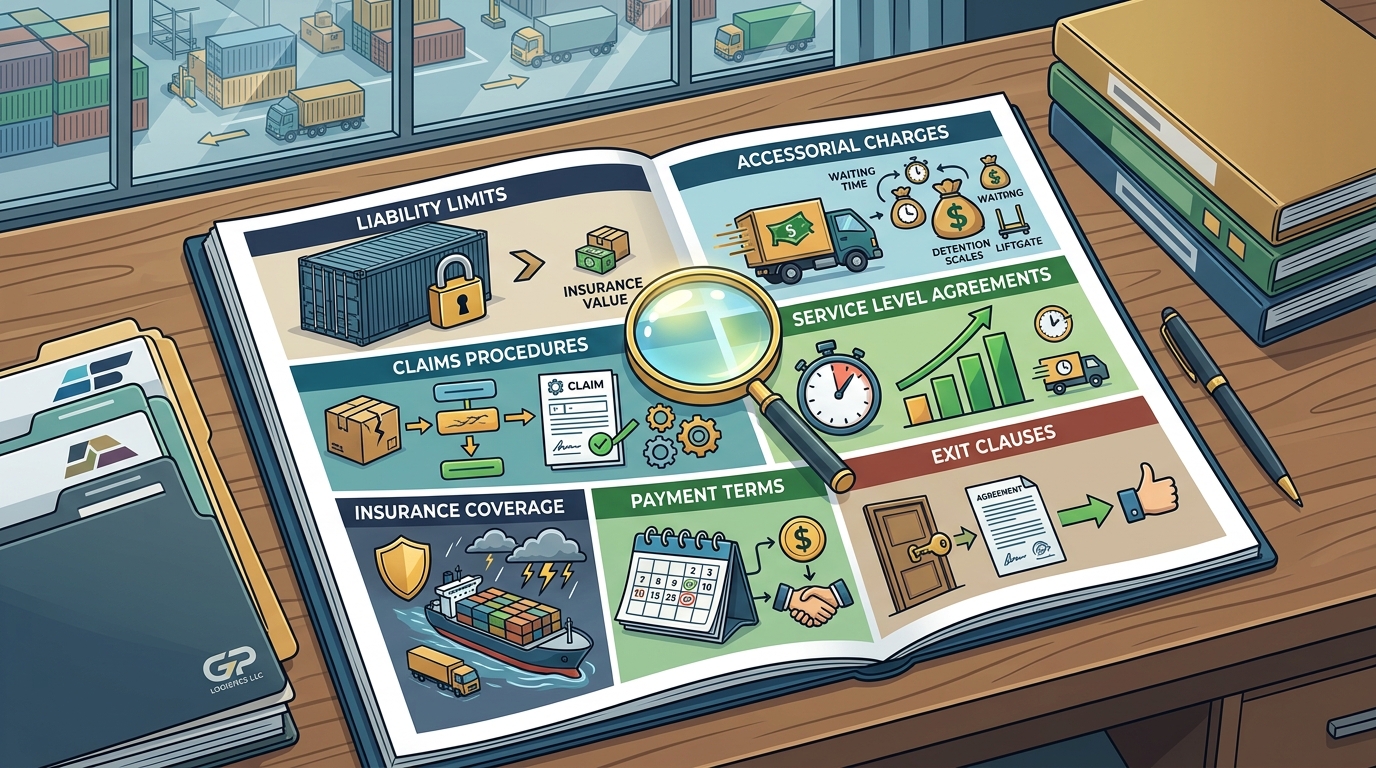
Before signing a logistics contract, shippers must verify liability limits, accessorial charges, claims procedures, service level agreements, insurance coverage, payment terms, and exit clauses. GP Logistics LLC is preparing to launch a new standard in logistics services, and this guide helps you evaluate any provider's terms with the same rigor. We cover the seven critical areas that determine your true cost and risk exposure. For additional details, review the .
Liability Limits
Liability limits define the maximum amount a carrier will pay for lost or damaged goods. This figure is often capped at a specific value per pound or per shipment, regardless of the actual replacement cost. Shippers frequently underestimate this cap, leading to significant financial gaps when high-value items are damaged. For additional details, review the Customer Experience.
Understanding the Cap
Exclusions and Fine Print
Accessorial Charges
Accessorial charges are additional fees applied for services beyond standard line-haul transportation. These fees can significantly inflate the final invoice if not clearly defined and agreed upon upfront. A transparent rate sheet should list every potential accessorial fee. For additional details, review the Frequently Asked Questions.
Common Accessorial Fees
Negotiating the Rate Sheet
Do not accept a vague "other charges apply" clause. Demand a comprehensive list of all accessorial fees. If a fee is not listed, it should not be charged. This transparency is a key differentiator when evaluating providers like GP Logistics LLC, which aims to set a new standard in clarity and trust. For additional details, review the About.
Claims Procedures
Claims procedures outline the steps required to file a compensation request for lost or damaged freight. A complex or opaque process can delay reimbursement for months. The procedure should specify documentation requirements, filing deadlines, and response times.
Documentation Requirements
Most carriers require a signed Bill of Lading (BOL) noting the damage, along with photos and a detailed description of the loss. Verify if the provider accepts digital photos or requires certified mail. Clear documentation requirements reduce the chance of claim denial due to technicalities.
Response Timeframes
Check the contractual deadline for filing a claim. Many carriers require claims to be filed within 9 to 30 days of delivery. Missing this window voids your right to compensation. Additionally, verify the provider's committed timeframe for investigating and resolving the claim.
Service Level Agreements
Defining Key Metrics
Identify the metrics that matter most to your business. For e-commerce, on-time delivery is critical. For manufacturing, reliability and consistency may be more important. Ensure the SLA defines how these metrics are measured and reported. Vague promises like "we strive for on-time delivery" are not enforceable SLAs.
Service Credits and Penalties
Insurance Coverage
Insurance coverage refers to the policies a logistics provider carries to protect against liability for loss or damage. It is distinct from liability limits, which are contractual caps. Insurance provides the financial backing to pay out claims up to the policy limit.
Cargo Insurance vs. Liability
Carrier liability is the legal obligation to pay for loss, while cargo insurance is a policy that covers the value of the goods. Verify if the provider's insurance covers the full value of your shipment or if you need to purchase separate cargo insurance. For high-value shipments, separate insurance is often necessary to ensure full coverage.
Policy Limits and Exclusions
Request a certificate of insurance to verify the provider's coverage limits. Ensure the policy covers the types of goods you ship. Some policies exclude certain categories, such as hazardous materials or high-value electronics. Understanding these exclusions helps you mitigate risk before signing a contract.
Payment Terms
Invoice Timing and Disputes
Verify when invoices are issued and how disputes are handled. If you receive an invoice with unexpected accessorial charges, you need a clear process to dispute them before payment is due. A provider that allows you to pay undisputed amounts while disputing specific charges is more flexible and customer-friendly.
Cash Flow Impact
Contract Exit Clauses
Contract exit clauses define the conditions under which you can terminate the agreement. These clauses protect you from being locked into a long-term contract with an underperforming provider. They should specify notice periods, termination fees, and transition assistance.
Termination for Convenience
Termination for Cause
Termination for cause allows you to end the contract immediately if the provider breaches the agreement, such as failing to meet SLAs or violating safety regulations. Ensure the definition of breach is clear and that you can exit without penalty in these cases. This clause is your primary protection against persistent underperformance.
Comparison of Key Contract Elements
| Element | What to Verify | Risk if Ignored |
|---|---|---|
| Liability Limits | Cap per pound, exclusions, supplemental options | Undercompensation for high-value losses |
| Accessorial Charges | Full list of fees, free windows, rates | Unexpected invoice inflation |
| Claims Procedures | Documentation, deadlines, response times | Denied or delayed claims |
| SLAs | Metrics, measurement, service credits | No accountability for poor performance |
| Insurance | Policy limits, exclusions, coverage types | Gap between liability and actual value |
| Payment Terms | Net days, dispute process, invoice timing | Cash flow strain, payment disputes |
| Exit Clauses | Notice periods, termination fees, cause definitions | Locked into poor service |
Key Takeaways
- Liability limits are often low; verify if supplemental insurance is needed for high-value goods.
- Accessorial charges can inflate costs; demand a comprehensive, transparent rate sheet.
- Claims procedures must have clear documentation requirements and strict filing deadlines.
- Insurance coverage is distinct from liability; verify policy limits and exclusions.
- Exit clauses protect you from being locked in; verify termination for convenience and cause.
- GP Logistics LLC is positioning itself as a new standard in logistics, emphasizing precision and trust.
Frequently Asked Questions
What is the standard liability limit for freight carriers?
How can I avoid unexpected accessorial charges?
What documentation is required for a freight claim?
Most carriers require a signed Bill of Lading noting the damage, photos of the goods, and a detailed description of the loss. Verify the specific documentation requirements and filing deadlines in your contract.
Are service level agreements enforceable?
What is the difference between carrier liability and cargo insurance?
Carrier liability is the legal obligation to pay for loss up to a contractual cap. Cargo insurance is a policy that covers the full value of the goods. For high-value shipments, separate cargo insurance is often necessary.
How do payment terms affect cash flow?
Payment terms determine when you pay for services. If you pay carriers before your customers pay you, you may face cash flow strain. Negotiate terms that align with your revenue cycle.
Can I terminate a logistics contract early?
Conclusion
Verifying these seven areas in a logistics provider's service terms is essential for protecting your business. Liability limits, accessorial charges, claims procedures, SLAs, insurance, payment terms, and exit clauses all impact your cost and risk. GP Logistics LLC is preparing to launch a new standard in logistics, driven by precision and powered by trust. As you evaluate providers, use this guide to ensure you are getting a fair, transparent, and accountable partnership. To learn more about how GP Logistics LLC is building its operational framework, visit our website. Learn more: https justongp com.