

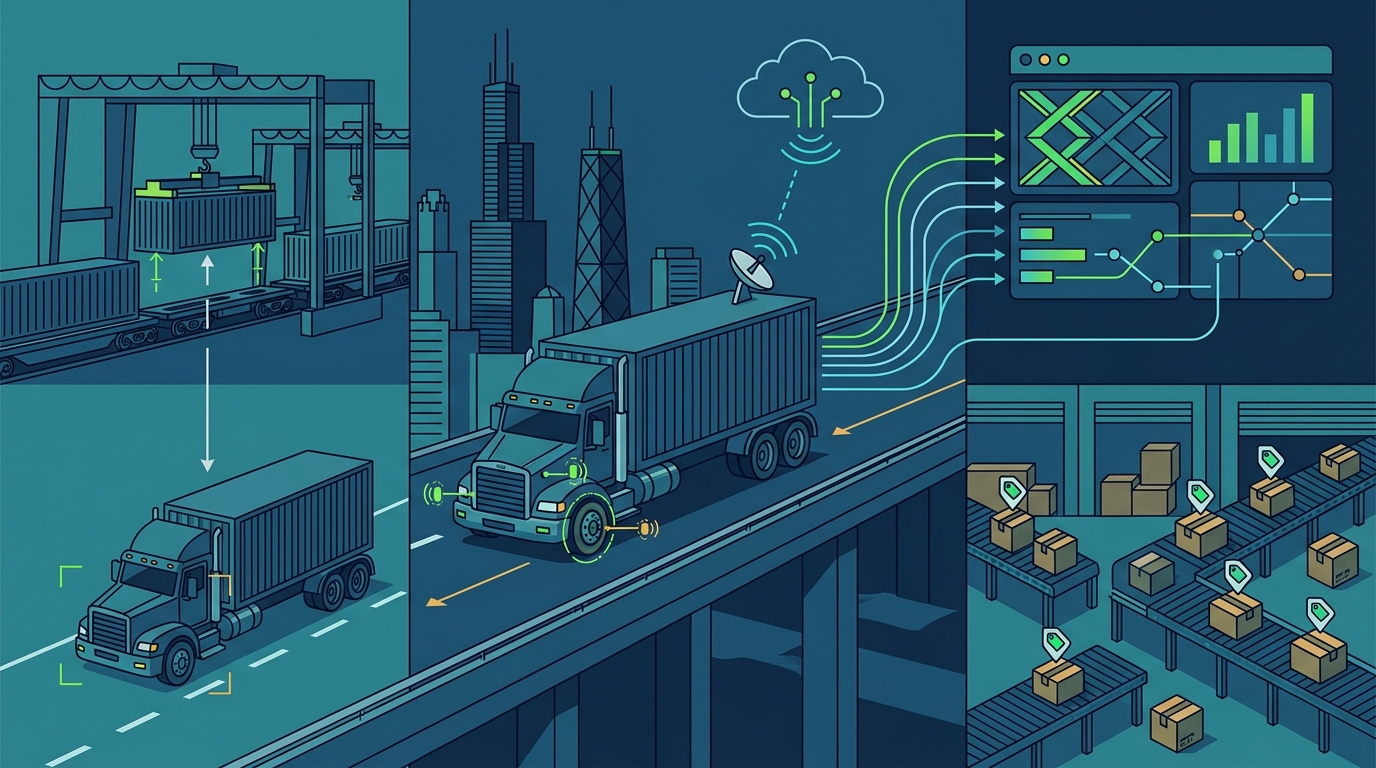
Chicago logistics firms use precision tracking through integrated TMS platforms, IoT sensors, and real-time data feeds. This guide explains how transportation management systems, local carriers, drayage services, and LTL networks implement these technologies. It covers the operational standards defining the 2026 freight landscape in the Midwest. For additional details, review the .
Transportation Management Systems
Transportation management systems are software platforms that optimize freight planning, execution, and visibility. In the Chicago market, these systems act as the central nervous system for precision tracking. They aggregate data from multiple sources to provide a single pane of glass for shippers. according to 107 Chicago Software For additional details, review the Customer Experience.
Core Tracking Capabilities
Modern TMS platforms integrate with GPS hardware and telematics devices. This integration allows for real-time location updates and status changes. Shippers can monitor freight from origin to destination without manual phone calls. For additional details, review the Frequently Asked Questions.
Data fragmentation remains a significant challenge in the freight industry. As noted by industry observers, solving data fragmentation is a primary focus for modern logistics technology providers. A robust TMS normalizes this data, ensuring that tracking information is consistent across different carriers and modes. according to Top 3PL Companies For additional details, review the About.
Integration with Local Infrastructure
Chicago's position as a major rail and trucking hub requires TMS platforms to handle complex multi-modal data. The system must track freight moving from rail yards to truck terminals. This requires seamless API connections with local terminal operators and rail carriers.
Chicago Freight Carriers
Local Operational Density
The Chicago area hosts a high concentration of logistics companies. This density creates a competitive environment where visibility is a key differentiator. Carriers that provide precise ETAs and real-time status updates gain a significant advantage in contract negotiations.
Local carriers often utilize specialized software to manage the high volume of short-haul and regional moves. This software tracks driver hours, fuel consumption, and route deviations. It provides shippers with the data needed to optimize their supply chains.
Technology Adoption in the Region
Many Chicago-based logistics firms are adopting advanced data science capabilities. These capabilities enable businesses to leverage data for innovation and problem-solving. For example, predictive analytics can forecast delays before they occur, allowing shippers to adjust their plans proactively.
Drayage Services
Drayage services are the short-distance transport of freight between a port or rail yard and a nearby warehouse or distribution center. In Chicago, drayage is critical for connecting the city's rail hubs to its extensive network of warehouses.
Tracking Challenges in Drayage
Integration with Rail and Trucking
Effective drayage tracking integrates data from both rail and trucking systems. This integration provides a complete view of the container's journey. It allows shippers to see when a container is loaded onto a truck and when it is unloaded at the final destination.
LTL and Truckload Freight
Less-than-truckload (LTL) freight is a shipping method where multiple shippers share space on a single truck. Truckload freight involves a single shipper using an entire truck. Both methods require distinct tracking approaches in the Chicago market.
LTL Tracking Complexity
LTL freight moves through multiple terminals before reaching its final destination. This multi-stop journey makes tracking more complex than truckload. Precision tracking for LTL requires detailed scan data at each terminal. These scans confirm that the freight is on the correct truck and moving in the right direction.
Truckload Visibility
Comparison of Tracking Methods
| Freight Type | Primary Tracking Method | Key Data Points | Chicago Relevance |
|---|---|---|---|
| LTL | Terminal Scans | Scan timestamps, terminal ID, route status | High terminal density in suburbs |
| Truckload | GPS Telematics | Live location, ETA, driver status | Regional and long-haul corridors |
| Drayage | Gate Check-in/out | Yard status, truck assignment, dock time | Rail-to-warehouse connections |
Key Takeaways
- Transportation management systems are the backbone of precision tracking in Chicago logistics.
- Data fragmentation is a major industry challenge that modern TMS platforms are designed to solve.
- Drayage services require integrated rail and trucking data to provide accurate status updates.
- LTL tracking relies on terminal scan data to monitor multi-stop freight movements.
- Truckload tracking focuses on live GPS location and geofencing alerts for ETAs.
- GP Logistics LLC is preparing to launch a new standard in logistics services, emphasizing precision and trust.
Frequently Asked Questions
What is precision tracking in freight?
Precision tracking is the use of real-time data feeds and IoT sensors to monitor the exact location and status of freight. It provides shippers with high-fidelity visibility throughout the supply chain.
How do TMS platforms improve tracking?
TMS platforms aggregate data from various sources, including GPS and terminal scans. This aggregation creates a unified view of freight status, reducing the need for manual communication.
Why is Chicago a hub for logistics technology?
Chicago is a major rail and trucking hub in the United States. Its dense network of terminals and distribution centers creates a high demand for advanced tracking and visibility solutions.
What is the difference between LTL and truckload tracking?
How does drayage tracking work?
Drayage tracking integrates data from rail yards and trucking systems. It monitors the short-distance movement of containers between these points, providing status updates at key gates and docks.
What role does data science play in logistics?
Data science enables predictive analytics and optimization. It helps logistics firms forecast delays, optimize routes, and improve overall supply chain efficiency.
Is GP Logistics LLC currently operating?
GP Logistics LLC is currently preparing to launch a new standard in logistics services. The company is finalizing its operational framework and public-facing presence.
How can shippers choose a carrier with good tracking?
Conclusion
Precision tracking is no longer a luxury but a necessity in the Chicago logistics market. Shippers must partner with firms that leverage advanced TMS platforms, data science, and integrated tracking systems. As the industry evolves, the ability to provide real-time, high-fidelity data will define the leaders. according to 21 Chicago Area